United States · Checked 17 September 2026
Two decisions often sit in the same document
Legal custody usually concerns responsibility for important choices about a child. Physical custody concerns where the child lives. In California, each can be joint, meaning shared, or sole, meaning assigned to one parent.
A child might live mainly with one parent while both parents share important decisions. Equally, a timetable with similar numbers of nights does not tell you whether either parent can choose a new school alone.
What counts as an important decision?
California’s court guide gives examples including school, healthcare, mental-health treatment, religion and some activities or travel. The wording of the order matters: it may identify decisions that need agreement or give a parent a particular responsibility.
Everyday decisions still have to be made while a child is being cared for. A dispute about a bedtime and a dispute about changing schools therefore need different questions. The order and applicable state rules explain the boundary.
Your state may use different words
Texas uses conservatorship for parental rights and duties. Possession and access describe when a child spends time with a parent. A possession order is a timetable, not a statement that a child is someone’s property.
The Texas guide also uses SAPCR, short for suit affecting the parent-child relationship. That is the type of court case in which arrangements may be decided. Those words do not create a different set of everyday needs for the child; they identify the local legal process.
Read an order in five passes
- Find whether it is temporary or final, and whether there is a later order changing it.
- Look for the section assigning school, medical and other important decisions.
- Read the ordinary schedule, then the separate holiday and special-date provisions.
- Check any requirements about communication, handovers, supervision, travel or moving.
- Note what it says about disagreements or future changes, and any issue it does not answer.
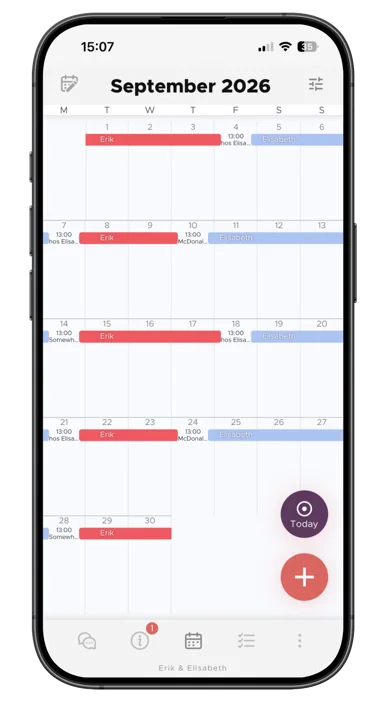
A calendar is useful for putting the timetable into practice. It does not replace the wording of the order or create a power the order does not give.
If there is no order, or the wording is unclear
The starting position can depend on legal parenthood, marital status and state law. It is not safe to assume that a phrase used by a friend in another state describes your position.
Court self-help services can explain which process applies to an initial order, clarification, enforcement or a change. Enforcement means asking for an existing requirement to be followed; changing the requirement is a different request.
A court may need additional information if more than one state is involved. Moving does not automatically transfer authority over the case.
Keep payments and safety in their own place
Child support deals with financial responsibility. Paying it does not, by itself, determine who makes decisions or when contact occurs.
An order may also include specific safety conditions. Domestic violence can affect both the arrangements and how the court handles the case. It should not be treated simply as a disagreement about parenting styles.
This guide explains general rules and services. It does not assess your individual case.
Official guidance and sources
Information checked on 17 September 2026.
Based on the original article by Elisabeth Scholander.