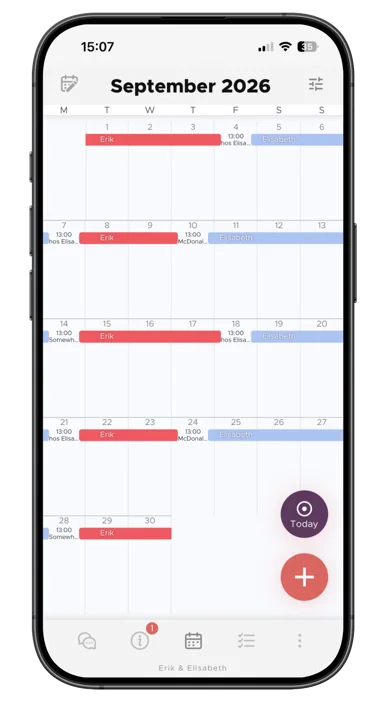
You can have different feelings on the same day
You might miss someone while having fun where you are. You might feel relieved after a difficult time, or wish things were different. You do not have to pretend that everything is fine to protect an adult’s feelings.
There can be things you enjoy in each home: reading together, cooking, seeing a sibling or having a familiar place to relax. Enjoying those things does not mean you love someone else less.
Ask adults to help with the practical stuff
Forgetting a schoolbook or a favourite jumper is frustrating. Adults can help you make a plan. You could say:
- “Can we make a short packing list together?”
- “I keep forgetting this. Can we find a way for it to be where I need it?”
- “Can you tell me the plan for this week?”
- “I need some quiet time when I arrive.”
Describe one thing that is difficult
You do not need to solve the whole schedule to explain a problem. Try describing what happens and what you need.
For example: “I am really tired after the journey on school mornings,” or “I miss football because I cannot get there from this house.” Adults are responsible for considering what can change. You are not responsible for settling a disagreement between them.
You do not have to carry adult messages
Asking for help is different from being asked to negotiate for a parent. Money, arguments and arrangements between adults are their responsibility.
If you are asked to pass on an upsetting message, you can tell a trusted adult: “I do not want to be in the middle. Can you talk to each other another way?” You do not have to keep trying if saying that feels unsafe.
Find someone who will listen
You might speak to a parent, teacher, school counsellor, relative or another trusted adult. It can help to start with “There is something about moving between homes that I want help with.”
If someone hurts you, threatens you or makes you feel unsafe, tell a trusted adult. If the first person does not help, try another. You do not need to decide whether the problem is serious enough before asking for help. In immediate danger, get help from an adult nearby or emergency services.
A small plan for the next changeover
- Check when you are going and who is taking you.
- Ask an adult to help with what you need to bring.
- Choose one familiar thing or routine that helps you settle.
- Tell someone if something about the plan worries you.
The adults may not be able to change everything immediately. They can still listen, explain the plan and help with the things that are hard.
Based on the original article by Malin Bergström.