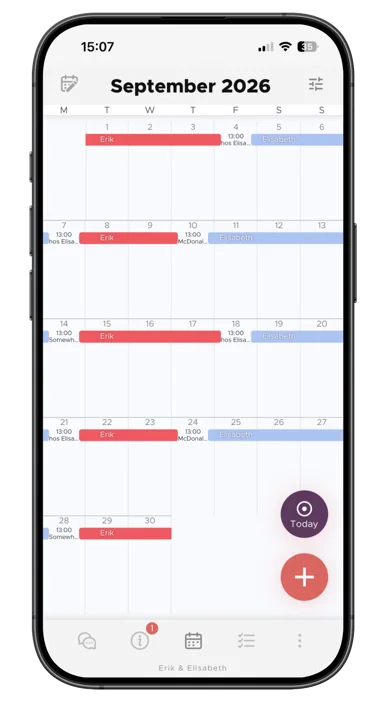
Ordinary moments are part of parenting
Knowing a friend’s name, helping with homework or noticing that a child has had a difficult day can matter as much as a special outing. In two homes, a practical aim can be to preserve safe, dependable care in those ordinary moments.
This is a perspective on daily parenting, not a claim that one country or timetable has solved separation. The number of homes does not tell you whether care is safe or responsive.
A Swedish study: what was actually measured
A 2015 study by Bergström and colleagues used a Swedish school survey of 147,839 pupils in sixth and ninth grade. Children sharing physical care reported fewer psychosomatic problems than children living mostly or only with one parent, but more than children whose parents lived together. The questionnaire asked about sleep, concentration, headaches, stomach aches and other symptoms.
This was a comparison at one point in time, not an experiment assigning children to homes. The researchers called for studies following families before and after separation. The result cannot show that a particular schedule caused the difference, or tell us what will suit a younger child.
Think about what each relationship offers
A child’s support network can include parents, siblings, grandparents, friends and other trusted adults. Relationships can bring comfort, practical help, shared interests and a sense of belonging.
A plan may protect those connections in different ways. For some families, time in both homes supports them. Other children need a different arrangement. The aim is not to fit every family into a weekly rotation.
Make everyday involvement practical
- Help the child reach school, friends and activities without unnecessary travel.
- Keep the information needed for care available to the responsible adults through safe channels.
- Plan medicines, equipment and belongings so the child is not the only person remembering them.
- Leave room for rest and ordinary time together, rather than filling every stay with activities.
- Allow the child to care about people in the other home without being drawn into adult disagreement.
A familiar routine can still need adjusting
Ask about a particular part of the week: “How is the journey on Monday?” or “What do you keep needing when you are here?” Specific questions can reveal problems that “Do you like the schedule?” misses.
If a child is tired, unsettled or worried, do not assume it proves either that two homes are wrong or that they simply need to try harder. Look at the cause and seek appropriate help when difficulties persist.
Safety comes before preserving a pattern
Where there is abuse, fear or coercive behaviour, frequent contact or joint planning may not be safe. A child should not have to maintain a relationship at the cost of their safety or manage the adults’ risk.
This article describes a Swedish parenting perspective. It does not explain Swedish legal rights or suggest that Swedish arrangements decide what is lawful elsewhere.
Research discussed in this article
Based on the original article by Malin Bergström.