





England
Cooperation
Making a Parenting Plan in England
A clear plan can reduce last-minute messages and misunderstandings. Here is what a parenting plan can cover in England, and how it differs from a court order.
Does your child favor you or your co-parent? It's common and usually nothing to worry about — but the phases when a child clings to one parent can be hard on everyone.

Many children go through phases of having a favorite parent. That preference can be hard to handle, especially in a shared custody arrangement, because a child's natural leanings don't always match our expectations. For the parent who feels left out, the rejection stings. For the "favorite," it can be exhausting to be needed so intensely, and they often need extra support. It's easy to assume favoritism comes from one parent spoiling the child or being too strict, but it usually isn't about how the child is treated at all — it can simply be part of how attachment relationships develop. Keep that in mind when the rejection feels discouraging, or when a little one wants to be glued to you around the clock!
Tip! If your child is strongly attached to one parent, it may help to adjust the living schedule so the child spends a bit more time with that parent — for instance, an extra night with the favored parent during the other parent's week.
Remember: some children are especially attached to one parent throughout childhood, while others move through phases of neutrality or shifting favorites. What children need from their parents in these periods is attention and patience.
Malin Bergström Child psychologist, associate professor and author
27 August 2026
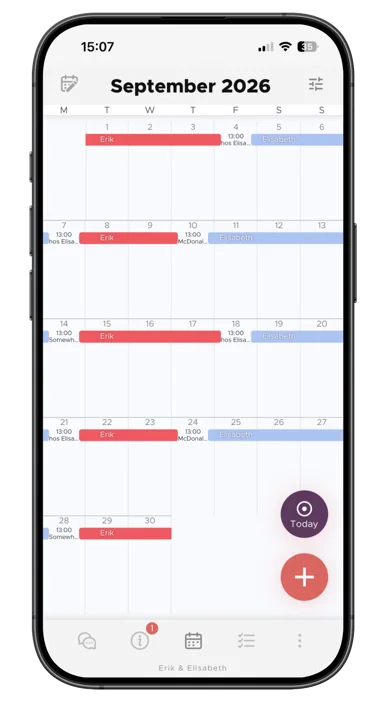
"The turning point came when we found the Every Other Week app. There's less fuss and both of us have a better handle on things. It feels so great!”
"Thank you so much for this app, it has finally gotten us to communicate!”

England
Cooperation
A clear plan can reduce last-minute messages and misunderstandings. Here is what a parenting plan can cover in England, and how it differs from a court order.
United States
Cooperation
A written plan can reduce uncertainty about school weeks, holidays and handovers. In the United States, its legal effect depends on your state and whether the court has approved it.
Canada
Cooperation
A parenting plan puts the everyday arrangements in one place. For families in Canada, a useful plan explains both the weekly routine and how bigger decisions will be made.

Cooperation
Summer planning when you share custody: start early, agree on the holiday weeks, swap days when you need to, and balance old traditions with new ones.

Separation
Separating with children? A checklist of what to sort out first: where everyone lives, the schedule, handovers, money, sick days, and what to tell the kids.