United States · Checked 17 September 2026
Why equal nights do not settle the money question
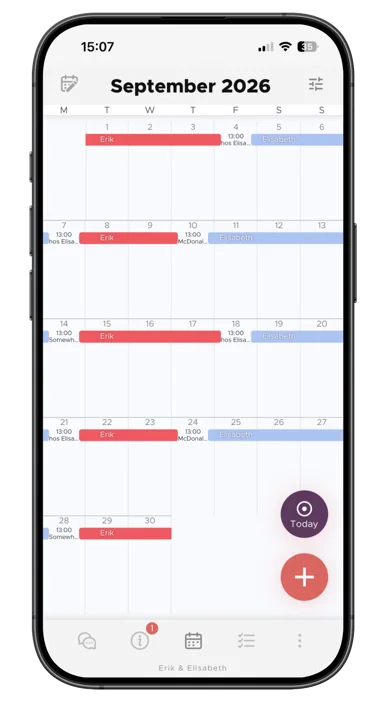
A timetable tells you where your child stays. It does not tell you what either parent earns, what childcare costs, or who pays for health coverage. Two homes may also each need a bed, clothing and space for homework.
California’s guideline, for example, considers parents’ income and tax circumstances as well as their time with the child. This means two families with the same weekly schedule can have different support amounts.
Work out which costs you are discussing
- Regular support: the amount required by the support order.
- Health coverage and medical bills: these may have separate provisions.
- Childcare and other additional expenses: check whether and how the order includes them.
- Everyday spending in each home: groceries, transport and activities do not automatically count as an extra payment to the other parent.
A parent paying a school bill should not assume that it cancels part of the monthly support. Whether a payment receives credit depends on the order and applicable rules.
A practical example
Imagine parents sharing school nights equally. One parent earns considerably more, while the other pays the childcare bill. Saying “we each have half the nights” leaves both of those facts out.
The useful next calculation uses the correct state guideline and the required income and expense information. An agreement to split every receipt in half answers a different question and may leave the ordered support unchanged.
If the schedule has recently changed
A lasting change in care may justify reviewing support. A short holiday or occasional swap is different from a new year-round pattern. The service or court decides which facts affect the calculation.
- Compare the current order with the care arrangement now being followed.
- Gather the income, childcare and health-cost information the local process requests.
- Use the proper review or modification process. If parents agree, check how that agreement becomes an approved change.
- Check the effective date on the new decision. A private calendar change does not itself rewrite the payment obligation.
Tax claims use a separate set of rules
The Internal Revenue Service, or IRS, generally identifies the custodial parent by the greater number of nights the child lived with that parent. Where nights are equal, it uses an income tie-break rule. “Joint custody” on a state order does not answer this federal tax question.
Form 8332 can release certain child-related tax claims to the other parent in qualifying situations. It does not transfer every benefit: claims such as head-of-household filing status and the earned income credit have their own requirements.
It helps to keep the support calculation, the expense-sharing arrangement and the tax claim as three separate records. They can affect the same family without using the same rules.
This guide explains general rules and services. It does not assess your individual case.
Official guidance and sources
Information checked on 17 September 2026.
Based on the original article by Elisabeth Scholander.