





Separation
Checklist: Separating With Children
Separating with children? A checklist of what to sort out first: where everyone lives, the schedule, handovers, money, sick days, and what to tell the kids.
After a separation, teenagers often drift away, spending more time out of the house than in it. But teens need boundaries and secure parents just as much as before — and this is where you and your co-parent can help each other.

During a separation, young people can end up with a little too much freedom, because their parents' attention slips. Perhaps they escape to their friends to get away from the chaos at home. There they can do the things teenagers are expected to do — but they still need some adult supervision.
For teenagers, just as for younger children, a secure parent-child relationship means getting help with boundaries. When you separate as parents of a teen, the relationship may need to be rebuilt as two separate parent-child relationships instead of one shared one. But cooperation with your co-parent remains just as important.
A teenager's world outside the family can be large, and their range wide. So it matters that you know where your teen hangs out and who their friends are — it protects them from harm. If you and your co-parent work together on staying informed and keeping in touch, the safety net gets stronger.
Studies show that teenagers with separated parents smoke and drink more than teens whose parents live together, and the risk is highest when the child lives with only one parent. It clearly helps when both parents share the job of keeping an eye on them.
Demanding strict obedience and respect simply because you're the parent usually backfires: teens shut you out of their lives and do what they want anyway. Staying close to a teenager takes emotional openness and honesty from both of you.
But too much openness from a parent — about the separation, for example — can also make a teenager withdraw. Even when the relationship is built on mutual respect, teens want it to remain an attachment relationship: it is still the child who leans on the parent, not the other way around.
As your teen spends more time away from the family, you need boundaries that are actually respected — that's what lets you trust your teen and relax, which matters all the more when you're busy keeping your head above water during the separation. But trust also requires insight into what's going on in their life.
Tip! Keep in touch with the parents of your teenager's friends and check in now and then.
Tip! Simple communication with your co-parent helps — like the chat in the Co-parenting app, which is only about the children. Nothing else.
Malin Bergström Child psychologist, associate professor and author
27 August 2026
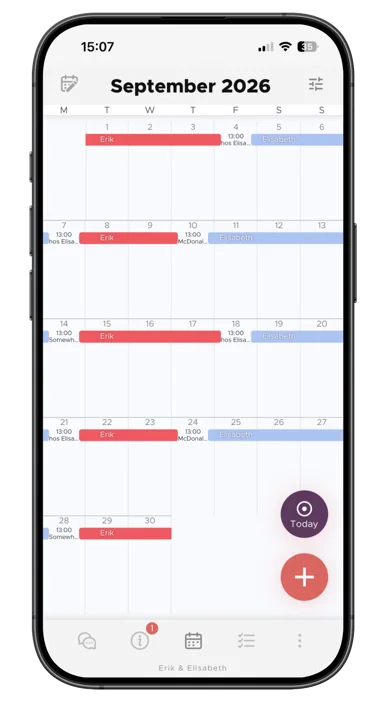
"The turning point came when we found the Every Other Week app. There's less fuss and both of us have a better handle on things. It feels so great!”
"Thank you so much for this app, it has finally gotten us to communicate!”

Separation
Separating with children? A checklist of what to sort out first: where everyone lives, the schedule, handovers, money, sick days, and what to tell the kids.

Separation
What to say when your child asks if you still love each other, or who wanted the divorce. Example answers to six tough questions, from a child psychologist.

Separation
Telling your children about a separation is hard. Child psychologist Malin Bergström on when to tell them, what to say and how to handle the days after.