





Separation
Checklist: Separating With Children
Separating with children? A checklist of what to sort out first: where everyone lives, the schedule, handovers, money, sick days, and what to tell the kids.
It helps to think ahead about how you'll answer your child's hardest questions about the separation. Here are examples of what you can say — and how to approach each question so your answer is as thoughtful as possible.

No, not as a couple anymore — that’s why we’re separating. But we love you, and we’re going to keep being your parents together.
No. Our love for each other as a couple has ended.
Answer honestly if it wasn’t a mutual decision, but skip the adult explanations and don’t blame each other. Even when one of you wants the divorce, the reason lies in how things have been between you. It’s fine to admit you’re sad or angry right now — just explain that those feelings will fade. Don’t lie, but don’t give more information than your child is actually asking for.
This is a delicate balance between honesty and oversharing, because the focus can easily shift to the new relationship or the infidelity itself. If infidelity played a part in the divorce, it should be acknowledged — but base your answer on what serves your child, not on what feels good to say. If the new person was a brief affair, or won’t be part of the child’s life, you might steer away from the topic: “This is about the three of us, and that’s what we want to talk about now.” Or you might confirm it plainly: “Yes, Mom has met someone, but our divorce is about how Mom and I have been together.” If your child has heard or suspected that someone else is involved, they need that confirmation.
Because Mom and I aren’t happy living together. We want to live in separate homes so we can feel happier and calmer. You’ll still be with both of us — just not at the same time.
If you do plan to spend time together, describe what that will look like: shared birthdays and school events, or the occasional coffee or dinner together? If you won’t be, explain that too. You might say it feels too hard to meet as a group right now, so you won’t all be together at the same time. Hopefully it will feel easier in the future — but don’t promise something you can’t keep.
Malin Bergström Child psychologist, associate professor and author
27 August 2026
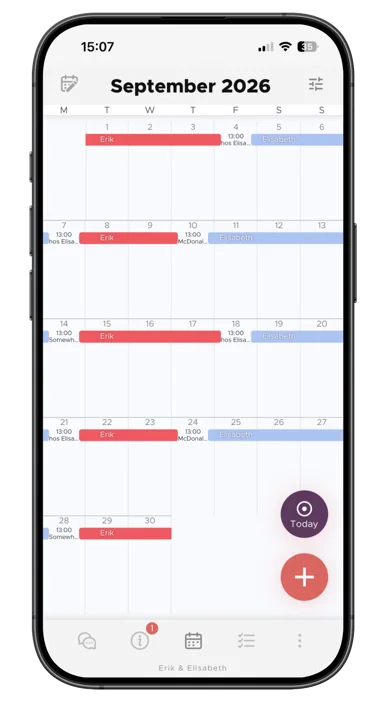
"The turning point came when we found the Co-parenting app. There's less fuss and both of us have a better handle on things. It feels so great!”
"Thank you so much for this app, it has finally gotten us to communicate!”

Separation
Separating with children? A checklist of what to sort out first: where everyone lives, the schedule, handovers, money, sick days, and what to tell the kids.

Co-parenting
Agreeing on a shared message about your separation can feel awkward, but it means you back each other up publicly — even if you feel deeply betrayed inside (that's okay). Here are tips for simple, clear communication that reassures your children and you.

Separation
Telling your children about a separation is hard. Child psychologist Malin Bergström on when to tell them, what to say and how to handle the days after.