





England
Cooperation
Making a Parenting Plan in England
A clear plan can reduce last-minute messages and misunderstandings. Here is what a parenting plan can cover in England, and how it differs from a court order.
Sometimes circumstances make it impossible for two parents to work as a team. Parallel parenting — limiting contact and each running your own home — protects your child (and you) from the conflict until co-parenting becomes possible.

Even when the conflict between you is so great that normal cooperation around the children is impossible, it's important to acknowledge that this is where you are — and to make a plan for how you can still create a safe environment for your children.
For the children, it is gentler when each parent focuses on their own parenting and limits the contact than when they are exposed to an ongoing conflict. In practice, that means keeping communication to a minimum and each of you taking responsibility for your own home.
Choose distanced, structured ways of communicating, with established and predictable channels of contact. A dedicated channel such as the Co-parenting app often works well: you can keep the communication in separate chat threads, one per topic, and every message passes through TalkSafe — an AI language filter that suggests calmer wording and stops outright hostile messages — before it reaches the other parent.
If direct contact is too difficult, perhaps a relative can carry information between you. When the conflict is intense, keep contact to a minimum. Let your child's transitions between the homes happen without you seeing each other, and think about whether other situations tend to trigger arguments or distance. Can they be avoided?
Even if your parenting runs on parallel tracks, keep each other informed about what the child is doing and how they are feeling. Show your child that there is a connection between your two worlds by commenting on what you know about the other parent's life. But don't interrogate the child about the other parent, and avoid fishing for or amplifying negative experiences. Focus on strengthening the child instead.
Sometimes a child's contact with the other parent while they are with you can escalate the conflict, create discomfort, or sour the atmosphere in your home. In that case the contact should be limited or structured. Agree that the child contacts the other parent at specific times — and if the contact doesn't feel good for the child, skip it altogether. Be prepared to accept the same arrangement when the child is with the other parent.
However hard it may be, parallel parenting requires you to let go of what happens at the other parent's — even when your trust is thin. It can be difficult to accept that you can't influence how your child is doing there. Strengthen your child's own ability to handle their situation, and protect the trust between you by keeping your relationship strong. You make things easier for your child by shaping what you can control: your life, and your child's life, when you're together.
When cooperation is difficult, it helps to keep the words "right now" in mind. Perhaps parallel parenting is what works right now, and for some time ahead. Your cooperation around the children may well improve. Keeping an open mind gives you a better chance of making that change in the future.
Malin Bergström Child psychologist, associate professor and author
27 August 2026
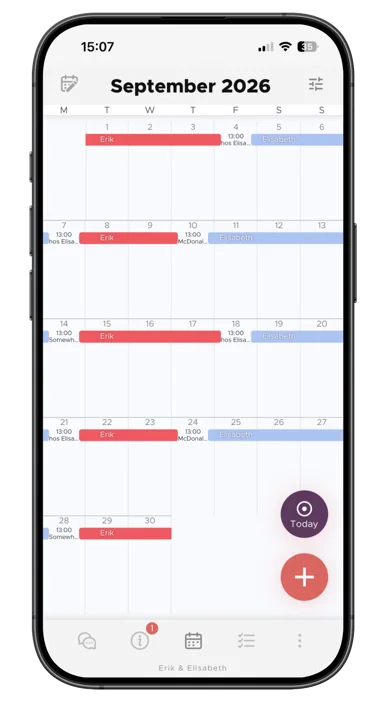
"The turning point came when we found the Every Other Week app. There's less fuss and both of us have a better handle on things. It feels so great!”
"Thank you so much for this app, it has finally gotten us to communicate!”

England
Cooperation
A clear plan can reduce last-minute messages and misunderstandings. Here is what a parenting plan can cover in England, and how it differs from a court order.
United States
Cooperation
A written plan can reduce uncertainty about school weeks, holidays and handovers. In the United States, its legal effect depends on your state and whether the court has approved it.
Canada
Cooperation
A parenting plan puts the everyday arrangements in one place. For families in Canada, a useful plan explains both the weekly routine and how bigger decisions will be made.

Cooperation
Summer planning when you share custody: start early, agree on the holiday weeks, swap days when you need to, and balance old traditions with new ones.

Cooperation
How to talk to your co-parent about the children without it turning into a fight: treat each other as colleagues, agree what you discuss and how often.