





Cooperation
How Toxic Messages to Your Co-Parent Affect Your Child
Hostile texts and emails to your co-parent reach your child even if they never read them. Child psychologist Malin Bergström explains why — and what helps.
Breaking old conflict patterns takes deliberate strategies — both when you prepare to deal with your co-parent and in the heat of the moment when anger starts to rise. Child psychologist Malin Bergström shares more practical tips for calmer communication.

Pick up and drop off your child as agreed, and be on time. If you're running late or something comes up, tell your co-parent as early as possible so they can plan around it — or at least understand the change.
If there's tension in your co-parenting relationship and you need to talk, use "I" statements: "I get stressed when you're late, because it makes me late too" — instead of "You never show up on time. I'm always waiting for you!"
You decide how you want to parent, and your co-parent does the same. That means owning your part of the parenting without interference from the other parent — as long as the child is safe and happy in both homes.
If your co-parent asks for help, try to say yes when you can. Children love seeing their parents help each other out without irritation — it shows them you both live up to your promise of being there for them. It also helps you avoid power struggles, over the child or between yourselves.
Children need a secure, stable environment with loving adults around them. By minimizing conflict and doing your part to reduce the arguments, you are acting in your child's best interest.
Malin Bergström Child psychologist, associate professor and author
27 August 2026
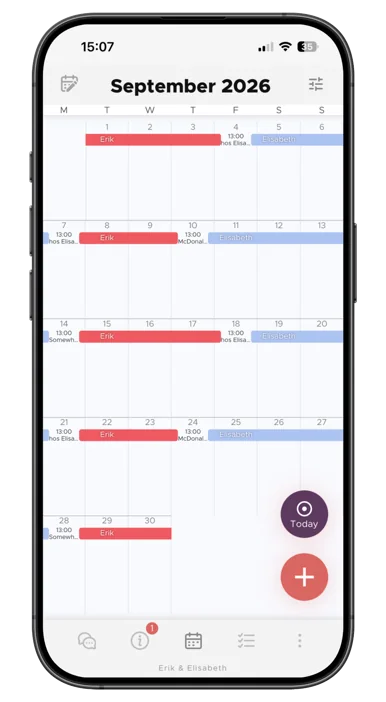
"The turning point came when we found the Co-parenting app. There's less fuss and both of us have a better handle on things. It feels so great!”
"Thank you so much for this app, it has finally gotten us to communicate!”

Cooperation
Hostile texts and emails to your co-parent reach your child even if they never read them. Child psychologist Malin Bergström explains why — and what helps.

England
Cooperation
A clear plan can reduce last-minute messages and misunderstandings. Here is what a parenting plan can cover in England, and how it differs from a court order.
United States
Cooperation
A written plan can reduce uncertainty about school weeks, holidays and handovers. In the United States, its legal effect depends on your state and whether the court has approved it.
Canada
Cooperation
A parenting plan puts the everyday arrangements in one place. For families in Canada, a useful plan explains both the weekly routine and how bigger decisions will be made.

Cooperation
Summer planning when you share custody: start early, agree on the holiday weeks, swap days when you need to, and balance old traditions with new ones.