




England
Youth
Can I Choose Which Parent to Live with in England?
You are allowed to say how living in two homes feels. If you live in England, adults should listen to your views—but you do not have to solve your parents’ disagreement.
What's it like to grow up alternating weeks between two homes? Matilda, 18, tells us about life in a big blended family — parents, siblings, step-parents, and a bunch of step-brothers — and what made it feel safe.
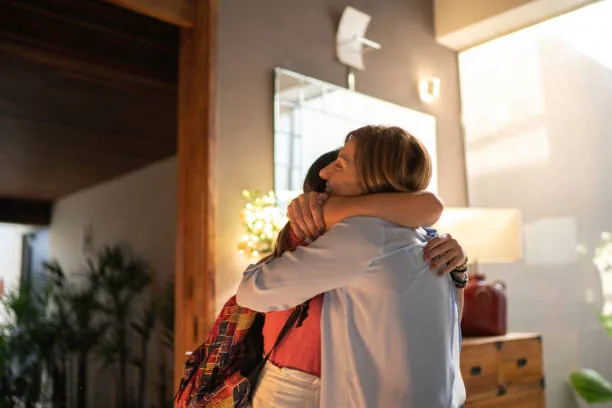
Matilda is 18 and in high school. She and her brother alternate between living with their mom and her husband, and their dad and his wife. She also has four step-brothers — three on her mom's side and one on her dad's. Matilda was four when her parents separated and she and her brother started living in two homes.
"I was very young when Mom and Dad divorced, so I barely remember life before. They met new partners who had kids, and to me it was natural that we would all be a family. I think young children live very much in the present. It wasn't until later, when I was older, that it hit me: what if Dad and Linda divorce?! That's when I got everyone, on both sides, to promise that we would still be a family no matter what," she says. "And of course we kids argue like any other siblings, but we know we have each other no matter what."
Matilda is happy to have a large family, and her relationship with her step-brothers is important to her. Having many children in the family creates a special bond, she says.
"I especially remember how my step-brother, who is six years older, took me under his wing and looked out for me. We had similar interests and both loved to draw, so we spent a lot of time together. If I was upset or had a fight with someone, he was always there to talk and listen. It was so nice! In a big family on both sides, your parents can't always be there to talk, so siblings become extra important," she says.
Matilda thinks sharing her time between her parents has gone well. Looking back, she says it was clear that both parents worked hard to make the two-home setup work.
"Mom was always there on the phone when I missed her. Being able to call her whenever I wanted was really important to me — it made the missing less intense. We talked often, and that suited me well. It mattered that Mom and Dad listened to me on this, and that it was always okay to call Mom when I needed to," she says.
When she got step-siblings, she sometimes worried that her dad would forget about her — that she would be replaced by a new child in the family. She wondered: "Is he spending more time with my dad now than I am? Are they having more fun than we usually do?" It was tough to hear about fun things they had done while she wasn't home.
"That's where my dad did a really good thing! He talked to me and my brother about how he is truly our dad and that no other kids can take our place. No matter what happens in life, he's ours. It was very reassuring to feel that and to have Dad be so clear about it. There was no room or reason to question it," says Matilda.
One thing that was hard about alternating homes was when Matilda's dad moved to the other side of town. Thinking back, she says the long commute was tough on her and her brother.
"It was tough, commuting so much all the time. I remember being really annoyed about it. In practice, it meant we couldn't stay with Dad when we started school early," says Matilda. "Long distances also make it harder for everyone when you forget things — which is bound to happen sooner or later. Then it's good if the adults take responsibility and help pick up and drop off stuff, instead of dumping it all on the kids to figure out. Our parents tried to sort out as much as they could, but it was still a bit tricky sometimes."
Matilda adds that it can also be tough when one of your parents meets someone new. She thinks it's important for the adults to take it slow — even though that's hard when they're in love.
"I understand that as a parent you might wish everything could be like a movie with angels singing, because you're so in love — but the kids aren't there yet! Kids need peace and quiet and time to get to know the new person, without any pressure. You can meet up outside the home for quite a while and do things together. Then, once you actually know each other a bit, maybe you start hanging out at home and doing the things kids do with family or close friends," Matilda suggests. "If you push too hard as a parent, you can actually ruin the chances of everything working out — just because you're in such a hurry yourself."
Children's need to take things slowly also shows in how nice it is to keep your own routines, even as the blended family forms and there are more people at home, she says.
"For me, Dad and my brother, it was super important to keep 'our thing' with rice cakes and Nickelodeon. That was ours. Not everything needs to change just because the family grows. Some things are new, but we still have our own thing," she says. "Adults need to respect that and not try to force everyone into one family too soon."
"Then you can add new traditions and habits together as time goes on. That's when it's good to do things with your step-parent. Linda and I used to paint our nails, for example, and everyone got their own time with each other," she adds.
Matilda believes the way you approach stepchildren plays a big role in how the relationship turns out. A good starting point, she says, is being genuinely interested in the children.
"I appreciated that my stepmom was genuinely interested in me and asked questions about me and my life because she really wanted to get to know me — not to impress my dad. It felt really good, and it definitely makes it easier to build a good relationship," she says.
Matilda has several friends who grew up in two homes, just like her. But sometimes she meets people who didn't — and who assume it must be terrible or sad to live alternately.
"I can really get annoyed when people feel sorry for you because of the way you've grown up instead of looking at the family you have. I have a great family, and I've had two secure places to grow up in instead of one. If there's ever been a fuss somewhere — as happens in all families — it's always calm and peaceful in the other part of the family. It's so nice! Most of my upbringing has been really good, and it's important to me to share that perspective too!"
Eighteen-year-old Matilda's story of growing up in a large blended family:
Elisabeth Scholander Family law attorney and mediator, specialized in conflict resolution for families
27 August 2026
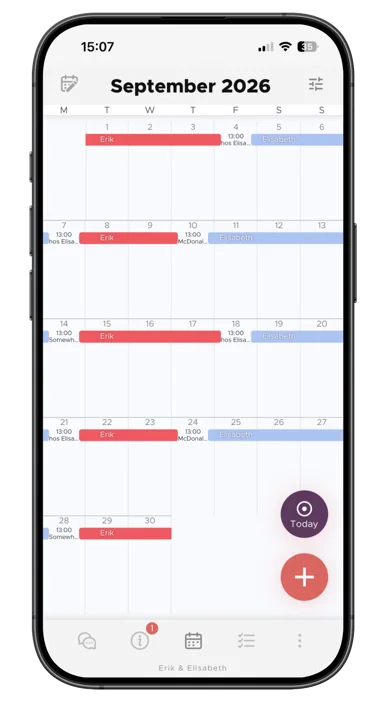
"The turning point came when we found the Every Other Week app. There's less fuss and both of us have a better handle on things. It feels so great!”
"Thank you so much for this app, it has finally gotten us to communicate!”

England
Youth
You are allowed to say how living in two homes feels. If you live in England, adults should listen to your views—but you do not have to solve your parents’ disagreement.
England
Youth
You deserve care, safety and someone who listens. If something at home feels frightening or hurts you, you can ask for help—even when the person involved is a parent.

England
Youth
You might feel sad, angry, relieved or unsure what you feel. If you live in England, there are people who can listen. You do not have to wait until things feel unbearable.
United States
Youth
You can tell adults what living in two homes feels like. In the United States, how a court hears children depends on the state. You are not responsible for deciding your parents’ dispute.
United States
Youth
You deserve care and protection from harm. If someone at home hurts you, threatens you or leaves you without the care you need, you can tell a safe adult.
United States
Youth
You may be worried, angry, relieved or not sure what you feel. If your parents are separating, you can ask someone to listen. You do not have to handle it alone.
Canada
Youth
You can say what life in two homes feels like. If you live in Canada, adults should listen to your views. You do not have to settle the disagreement between your parents.
Canada
Youth
You deserve care and protection from harm. If something at home hurts or frightens you, you can ask for help. You do not need to know the law before talking to a safe adult.
Canada
Youth
Changing homes or hearing your parents argue can feel like a lot to carry. If you live in Canada, you can ask someone to listen—even when there is no emergency or court case.