





England
Cooperation
Making a Parenting Plan in England
A clear plan can reduce last-minute messages and misunderstandings. Here is what a parenting plan can cover in England, and how it differs from a court order.
How do we strengthen our children and equip them for life, with all its joys and sorrows? The question feels especially urgent during a separation — and fortunately, there is a lot you can do to build your child's resilience.

A big part of how children handle crises and difficult events comes down to their resilience — the ability to bounce back. Resilience is connected to a child's personality, but it's also something we parents can influence. When we give children hope and show trust in their ability to manage change, we strengthen it. And facing life's inevitable difficulties together teaches children valuable lessons about life itself.
Consider giving your child a task now that everyday life isn't rolling along as usual. And show your appreciation when they take the initiative to support a sibling, or try to cheer you up or comfort you when you're down. When children comfort us and take responsibility, it often stirs up guilt in adults — but as long as you and your co-parent carry the heaviest load, it's genuinely good for children to be able to contribute.
Your child needs to be able to ask questions and be part of what's going on. The trick is involving children just the right amount — not shielding them from everything, or they end up the last to know what's happening in their own family. Involvement never means children should carry adult responsibility or become a dumping ground for their parents' emotions. It means they get to see what's going on, take part in what matters, and feel prepared. For younger children, that can be as concrete as the teddy coming along, or knowing who will pick them up from daycare. For older children, it can mean insight and a say in where they will live — or help keeping up contact with friends and staying in their sports and activities.
Malin Bergström Child psychologist, associate professor and author
27 August 2026
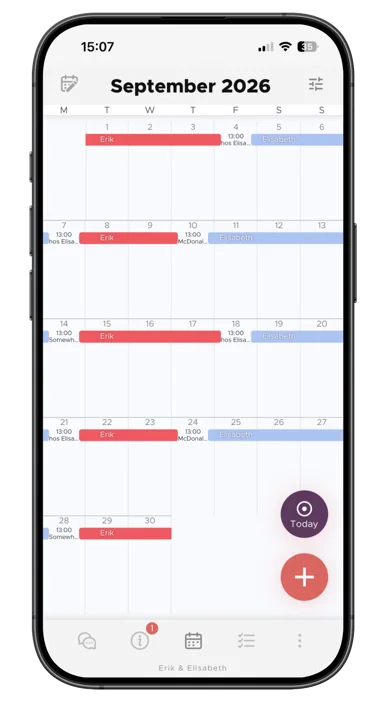
"The turning point came when we found the Every Other Week app. There's less fuss and both of us have a better handle on things. It feels so great!”
"Thank you so much for this app, it has finally gotten us to communicate!”

England
Cooperation
A clear plan can reduce last-minute messages and misunderstandings. Here is what a parenting plan can cover in England, and how it differs from a court order.
United States
Cooperation
A written plan can reduce uncertainty about school weeks, holidays and handovers. In the United States, its legal effect depends on your state and whether the court has approved it.
Canada
Cooperation
A parenting plan puts the everyday arrangements in one place. For families in Canada, a useful plan explains both the weekly routine and how bigger decisions will be made.

Cooperation
Summer planning when you share custody: start early, agree on the holiday weeks, swap days when you need to, and balance old traditions with new ones.

Separation
Separating with children? A checklist of what to sort out first: where everyone lives, the schedule, handovers, money, sick days, and what to tell the kids.