





Practical Matters
How to Ease Transitions Between Homes
Practical tips for smoother transitions between two homes: packing together, warm welcome-home routines, and what to do if your child resists the move.
When your child lives in two homes, school, the doctor and benefit services may each need updated details. This checklist explains the main address questions for parents in England.

England · Checked 17 September 2026
The council or school admission authority sets the address rules for applications. It may ask for evidence of where your child lives.
A shared-care schedule does not automatically mean either address can be used for a school place. The published admission rules explain how two-home situations are handled.
A GP is the family doctor who provides routine care and helps arrange other treatment. GP registration has its own process. A child should not simply be assumed to have two ordinary registrations at different practices.
The NHS—the National Health Service—explains registration and temporary care. The practice can explain what is needed after a move.
Only one person can receive Child Benefit for the same child. HM Revenue and Customs (HMRC), the tax authority, applies its rules if parents cannot agree who should claim.
Universal Credit also decides who is responsible for a child for benefit purposes. Equal nights do not automatically give both households the same child payment.
Putting an address on a school or benefit record does not itself give one parent all the decision-making power. A disagreement about school or a move may still need a separate agreement or court decision.
This guide explains general rules and services. It does not assess your individual case.
Information checked on 17 September 2026.
Based on the original article by Elisabeth Scholander.
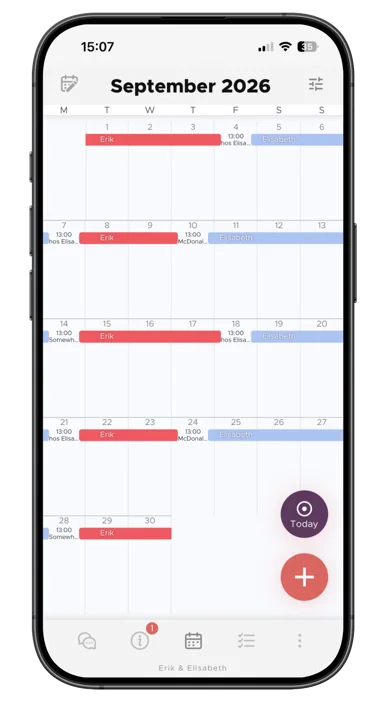
"The turning point came when we found the Every Other Week app. There's less fuss and both of us have a better handle on things. It feels so great!”
"Thank you so much for this app, it has finally gotten us to communicate!”

Practical Matters
Practical tips for smoother transitions between two homes: packing together, warm welcome-home routines, and what to do if your child resists the move.

Planning
Practical examples of 7+7, 2-2-3 and other parenting schedules, with questions to help you find a routine that works for your child.

Housing & practical matters
How should your child live after a separation — alternating weeks, another split, or one main home? Here's what matters most when you decide.