





Separation
Checklist: Separating With Children
Separating with children? A checklist of what to sort out first: where everyone lives, the schedule, handovers, money, sick days, and what to tell the kids.
Almost every child with two homes misses the other parent sometimes, and those big feelings can create sensitive situations. Here's how to support your child without it turning into conflict — with them or with your co-parent.

Almost all children with separated parents feel longing at times. Often they say nothing, because they don't want to hurt us and are afraid of how we'll react. Sometimes a simple phone call to the other parent is enough, so it helps to have a set time when the child can talk privately with the parent they miss. Occasionally such calls stir up emotions instead, leaving the child impossible to comfort afterwards. If your confidence as a parent is low, or your relationship with your co-parent is short on trust, the longing can sting even more. Just as when a child clearly prefers one parent, it's easy to start blaming each other for causing it. That kind of conflict doesn't help the child — it just teaches them to hide their feelings.
The best approach is to acknowledge your child's longing, help them put it into words, and try to comfort them. You might say, "I know you miss Daddy, sweetheart, but you can't be with him tonight. Come sit on my lap and let's see if that helps." If the child is inconsolable and the other parent is available, you can sometimes meet the child halfway and let them spend the night with the parent they miss. That is not a failure, and it doesn't mean the child will start using their emotions to get their way. Simply say, "I saw you were very sad and missing Mommy, so I called her to ask if you could stay with her tonight. Would you like that?"
Sometimes a child plays their feelings for a parent as a trump card in an argument: "I'm going to Daddy's — he's nice, at least." That isn't longing; it's a way to dodge the conflict. It's better to respond, "Yes, Daddy is very nice," than to let the child leave. Keep the focus on the fact that this is an issue between the two of you that needs to be worked out.
If you're the parent the child comes to, validate all their feelings: "Oh, I hear you were really angry with Mommy." But don't pour fuel on the fire. Instead, make clear that the conflict is something they need to sort out with the other parent.
Malin Bergström Child psychologist, associate professor and author
27 August 2026
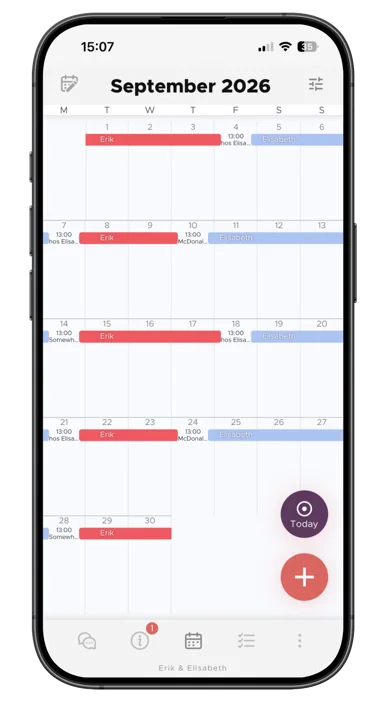
"The turning point came when we found the Every Other Week app. There's less fuss and both of us have a better handle on things. It feels so great!”
"Thank you so much for this app, it has finally gotten us to communicate!”

Separation
Separating with children? A checklist of what to sort out first: where everyone lives, the schedule, handovers, money, sick days, and what to tell the kids.

Separation
What to say when your child asks if you still love each other, or who wanted the divorce. Example answers to six tough questions, from a child psychologist.

Separation
Telling your children about a separation is hard. Child psychologist Malin Bergström on when to tell them, what to say and how to handle the days after.