Canada · Checked 17 September 2026
When the federal shared-parenting rule applies
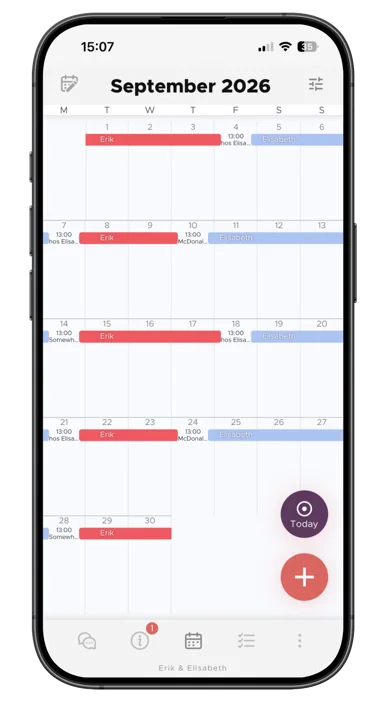
Section 9 applies when each parent exercises at least 40% of parenting time over the course of a year. It is a child support rule, not a requirement to choose that schedule. Different guidelines may apply depending on the family and province or territory.
Describe the actual care arrangement accurately. A label such as “joint custody” does not establish the percentage of parenting time or the support amount.
The calculation has three parts
The federal guidelines require consideration of:
- The table amount for each parent, based on the relevant income and table.
- The increased costs of shared parenting arrangements.
- The conditions, means, needs and other circumstances of each parent and the child.
Subtracting the lower table amount from the higher one can illustrate a difference between the parents’ starting figures, but it does not complete the legal assessment. A child may still need support flowing from one household to the other.
Make the costs understandable
Some costs occur in both homes, such as having a place to sleep. Other bills may be paid mainly by one parent, such as childcare or a qualifying health expense. Explain who pays what, without assuming that every duplicated purchase must be reimbursed.
For example, two parents with similar amounts of care may have very different incomes, or one may pay an eligible childcare bill. A night count alone would miss those facts. Special or extraordinary expenses are considered separately under the applicable rules.
Canada child benefit is a different calculation
The Canada child benefit, or CCB, is a government payment. Child support is an obligation between parents. Do not use the same arithmetic for both.
For CCB shared-custody purposes, the Canada Revenue Agency generally uses an approximately equal arrangement, with the child living with each person between 40% and 60% of the time. Each eligible parent receives 50% of the amount they would receive with full care, calculated using their own adjusted family net income. The two payments can therefore differ.
When care or income changes
- Record what changed and when, including who now handles regular costs.
- Exchange the required current income information through an appropriate, safe channel.
- Check the process for changing your support order or agreement.
- Update the CRA separately about the child’s care arrangements and other relevant claim information.
- Keep following existing obligations until they are properly changed.
This guide explains general rules and services. It does not assess your individual case.
Official guidance and sources
Information checked on 17 September 2026.
Based on the original article by Elisabeth Scholander.