




Cooperation
What to Include in a Parenting Plan
A parenting plan checklist: the regular schedule, holidays, exchanges, decisions, communication, expenses, travel and how to change the plan later.
It's hard to be a good parent when your relationship with your co-parent is strained — that's one of the reasons we built the Co-parenting app. Here's how to think about a tough situation, and what you can do to calm things down.

When you leave a long-term relationship, old negative patterns can follow you into the new parenting relationship. That drains the joy out of parenting and steals valuable energy. For the sake of both children and parents, toxic communication patterns need to stop.
Before we get into what you can do to turn a tough situation around, one thing must be clear. The responsibility for insults or attacks rests entirely with the person behaving unacceptably. It's equally important to know — and feel — that there are things you can do yourself to change a situation that isn't sustainable in the long run.
If you are subjected to criminal acts such as violence or threats, contact the police and/or social services for help.
Step one is to become aware of what's happening and understand it. Step two is to act — by setting and holding boundaries.
Write down your observations and gather your thoughts. If patterns emerge from the questions above, use them to change the contact between you.
Gather everything about the children in the app and keep every other channel completely free of contact. It brings peace, more space, and a sense of control.
If you share custody (and there are no signs of abuse or similar), be sure to pass on information from school and other things the other parent needs to know — in the app. It shows that you understand your shared responsibility for the children and handle your cooperation respectfully, even while contact between you is otherwise limited.
If things turn unpleasant, end the conversation for the moment and say you'll get back to them later. Then get back to your co-parent the way you said you would — it calms the situation and puts you in control. If your plans change, let your co-parent know and follow up when you can.
This saves energy you can spend on the children — or yourself — instead of on your co-parent.
If your children are younger, get help from daycare or school with pick-ups and drop-offs. When daycare or school is closed, you can ask someone you both trust to help with handovers, so you don't have to see each other for a while.
After some time (ideally two to three months), take stock again and see where things stand. Hopefully your contact has improved significantly. If it's better but not yet good, give it another two to three months and evaluate once more.
Continued harassment or intimidation can require support beyond a conversation between the parents. In Sweden, municipal family law services can assess whether cooperation talks are appropriate, while social services and the police have different protection and investigation roles. Joint talks or direct confrontation may be unsuitable where there is violence, threats or coercion.
Another option is to consult an experienced family law attorney who specializes in child disputes; it's good to understand your own position. At the same time, know that legal proceedings are very costly, both financially and emotionally. In some cases a dispute actually makes the situation worse rather than solving the problem. It has to be judged case by case.
Elisabeth Scholander Family law attorney and mediator, specialized in conflict resolution for families
17 September 2026
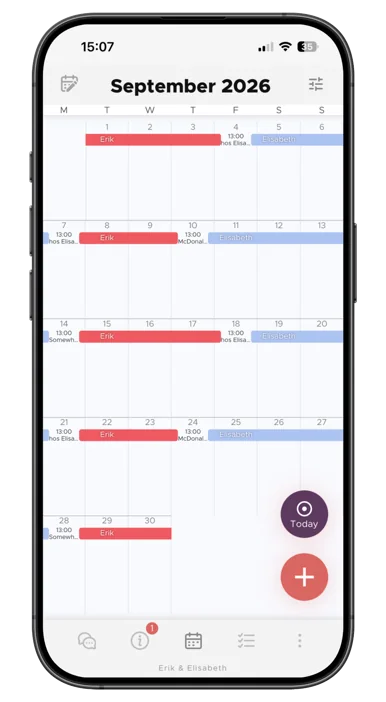
"The turning point came when we found the Co-parenting app. There's less fuss and both of us have a better handle on things. It feels so great!”
"Thank you so much for this app, it has finally gotten us to communicate!”

Cooperation
A parenting plan checklist: the regular schedule, holidays, exchanges, decisions, communication, expenses, travel and how to change the plan later.
Cooperation
What a right of first refusal clause means in a parenting plan, how the time threshold and notice work, who counts as childcare, and when to leave it out.

Cooperation
Hostile texts and emails to your co-parent reach your child even if they never read them. Child psychologist Malin Bergström explains why — and what helps.