





Cooperation
How Toxic Messages to Your Co-Parent Affect Your Child
Hostile texts and emails to your co-parent reach your child even if they never read them. Child psychologist Malin Bergström explains why — and what helps.
Children need to know they can come to you with anything — and trust is built by being present, not just by saying you're there. Here's how to create an open, positive dialogue with your child, even when the big conversations arrive in the middle of making dinner.

Invite your child to talk about the changes coming to their family — for example, by looking at a picture from last summer together. You can point out that this year will be different, with each parent taking turns spending time with the children. Talking about what has happened and what comes next helps your child piece together their own picture of the family change.
It's hard for children to open up to an adult who is angry or seems deeply sad themselves. So before a big conversation, take stock of how you're doing. If you're too upset to listen calmly, wait, or return to the subject once you've collected yourself. Your calm is what makes it safe for your child to talk.
Often it's best to just listen. Take your child's feelings seriously, without offering advice, explanations, or opinions about how they should feel instead. Put yourself in your child's situation and show that you understand. You can even try putting the feelings into words: "When you tell me this, you seem stressed and worried about moving between us — is that right?" Conversations like these help children understand more of what they're feeling and thinking.
You may have your own need to feel understood for how you've acted during the separation, but if your child is angry or accusing, avoid getting defensive. When you feel the urge to explain how things really are, bite your tongue. The goal is not for your child to share your picture of the divorce — it's for you to hear how your child experiences it. The temptation to describe what has happened between you parents can be strong, but only share what actually benefits the child.
Let your child finish talking without interrupting. Check that you've understood correctly, and ask whether they want to hear your view before you give it. Ask follow-up questions that can't be answered with a simple yes or no — questions that invite more storytelling. To show you're listening, you can hum, nod, or say things like "And then...?", "How does that make you feel?", "What do you think about it?"
Do you find it hard to listen and keep a good conversation going? Try focusing on the emotional undertones in what your child says. A long complaint about dragging the floorball stick and sports clothes between homes may really be about feeling sad about the divorce. If you can catch the feelings behind the words, the conversation can leave your child feeling understood and validated.
Compare that with explaining that everyone simply has to bite the bullet now that dad has chosen to move — the feeling after the conversation is completely different. So let your follow-up questions focus on what your child feels: "Does that mean you're sad and angry that you have to live in two places and deal with everything that comes with it?"
If your child chooses to talk about their other parent, listen without bringing in your own emotions and opinions. Try to understand together what has happened between them and what feels difficult. When your child tells you about their other parent, they are placing trust in you. Managing that trust is a balancing act between loyalty to your co-parent and loyalty to your child. You would of course never use such a confidence as an opening to slander, rage at, or badmouth your co-parent. But nor should you sell your child short by always siding strictly with the other parent.
The balance lies in validating your child's feelings — perhaps drawing on your own knowledge of your co-parent — without being disloyal to them. Instead of suggesting solutions, you can encourage your child to talk to their other parent, if you believe that's a realistic option. If your co-parent has behaved badly, you can ask whether the two of you should raise it with them together, or whether you should bring it up with your co-parent yourself. Respect how your child wants it handled.
Malin Bergström Child psychologist, associate professor and author
27 August 2026
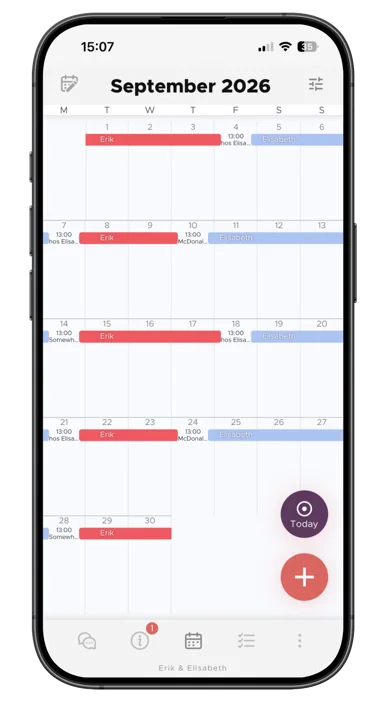
"The turning point came when we found the Co-parenting app. There's less fuss and both of us have a better handle on things. It feels so great!”
"Thank you so much for this app, it has finally gotten us to communicate!”

Cooperation
Hostile texts and emails to your co-parent reach your child even if they never read them. Child psychologist Malin Bergström explains why — and what helps.

England
Cooperation
A clear plan can reduce last-minute messages and misunderstandings. Here is what a parenting plan can cover in England, and how it differs from a court order.
United States
Cooperation
A written plan can reduce uncertainty about school weeks, holidays and handovers. In the United States, its legal effect depends on your state and whether the court has approved it.
Canada
Cooperation
A parenting plan puts the everyday arrangements in one place. For families in Canada, a useful plan explains both the weekly routine and how bigger decisions will be made.

Cooperation
Summer planning when you share custody: start early, agree on the holiday weeks, swap days when you need to, and balance old traditions with new ones.