





Cooperation
How Toxic Messages to Your Co-Parent Affect Your Child
Hostile texts and emails to your co-parent reach your child even if they never read them. Child psychologist Malin Bergström explains why — and what helps.
Children cope with separation and life in two homes in different ways. For some, it simply feels safer to shut one parent out for a while than to open the door to missing them.

It's common for children to ignore the parent they aren't currently staying with. Your child might not say hi if you run into each other in public — they look away, or look right through you. Others refuse to talk on the phone or on video calls. This is a child's way of managing a new family situation: mentally putting away the parent they aren't with right now. It protects them from starting to miss you, and that protection deserves respect.
Being ignored by your own child can hurt, especially in the middle of a separation when you may be struggling yourself. Try to remember that your child's behavior is most likely about their own needs — not a rejection of you as a parent. Later, you can talk about it: "When we met in the store, sweetheart, you didn't want to look at me. I waved a little anyway."
It's also wise to hold back on calling when your child doesn't want to talk. A better approach is to agree with the other parent that the child calls when they feel like it. Perhaps you message first, so the other parent can make sure you're available if the child wants to reach out.
Children often turn to the parent they're staying with at the moment, but they can also prefer each parent for different things. One provides the fun activities; the other gets all the confidences. Maybe the child wants mom at the swim meet even though it's dad's weekend — "she's so good at cheering," and she knows the other parents on the team. Maybe the child calls dad when something feels hard, even though it's mom's week.
Parents can find their child's choices unfair, and that can stir up anger and jealousy. But fighting with your child, or scolding your co-parent for creating the unfairness, is hardly mature parenting. On the contrary — I think you should be glad your child is brave enough to show what they want and need.
Too often, children adapt to what they think their parents want. That doesn't mean you have to accept the role your child has assigned you forever. You can't change your child or your co-parent — but you can change yourself.
Try to be glad your child can show what they need. If you want to change the situation in a positive way, spend more time with your child and focus on the things they find interesting and fun. Be patient.
Malin Bergström Child psychologist, associate professor and author
27 August 2026
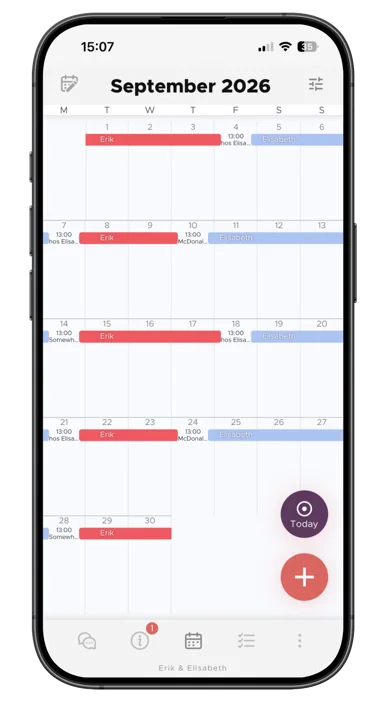
"The turning point came when we found the Co-parenting app. There's less fuss and both of us have a better handle on things. It feels so great!”
"Thank you so much for this app, it has finally gotten us to communicate!”

Cooperation
Hostile texts and emails to your co-parent reach your child even if they never read them. Child psychologist Malin Bergström explains why — and what helps.

England
Cooperation
A clear plan can reduce last-minute messages and misunderstandings. Here is what a parenting plan can cover in England, and how it differs from a court order.
United States
Cooperation
A written plan can reduce uncertainty about school weeks, holidays and handovers. In the United States, its legal effect depends on your state and whether the court has approved it.
Canada
Cooperation
A parenting plan puts the everyday arrangements in one place. For families in Canada, a useful plan explains both the weekly routine and how bigger decisions will be made.

Cooperation
Summer planning when you share custody: start early, agree on the holiday weeks, swap days when you need to, and balance old traditions with new ones.