

Separation
Checklist: Separating With Children
Separating with children? A checklist of what to sort out first: where everyone lives, the schedule, handovers, money, sick days, and what to tell the kids.
Homes often get smaller when we separate — but what matters most to children is feeling welcome and at home. Here are practical ways to create a home where your child can settle in and relax.
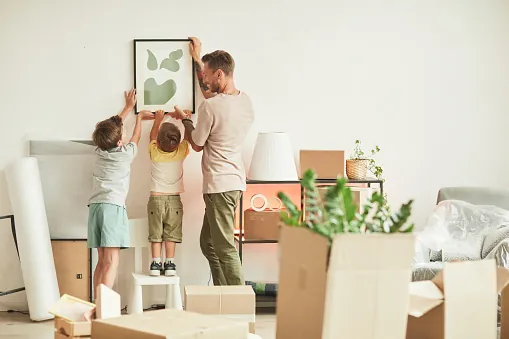
Alongside emotional support, it helps to involve your child in the move itself. Viewing apartments or houses together prepares and includes them. But children often struggle to understand that their own furniture and belongings can come along to a new home. Where adults see potential for renovating and decorating, children tend to see a home as fixed and complete.
Children need explanations and guidance on how the new home will become theirs. If you feel sad about the move and find the new home lacking, it may be better to wait to show your child the new place until you have adjusted and made it more welcoming.
Children notice when you've thought of them. It can be as simple as their pillow on the bed or their placemat on the table. Their favorite breakfast foods, their own pillow, a box of toys, and their own chair at the dining table all build a sense of home. Maybe your child has a special stuffed animal that always stays at one parent's house and gets a proper greeting at every visit.
It also helps to keep things the same between stays, so the home feels familiar when your child returns. Your child may need to share a room with you or a sibling, which can be positive and cozy right up until the teenage years. Most children in Sweden sleep with their parents at least occasionally, or for part of the night, until school age. If your child wants more privacy when sleeping, you can create separation with a curtain, shelf, or screen.
A sense of home doesn't require a separate bed or room. It can be a personal corner, a cozy nook, or a drawer that only they may open.
With less space, furnish based on how you actually use the home rather than how it "should" be used. However small the space, it's common for everyone to gather in one spot while some rooms sit unused. If siblings share a room, creating an extra play area in the living room means one child can have friends over while the other still has somewhere to play.
Involve the children in decorating and in deciding how the rooms will be used. What do they find cozy and inviting? Maybe you can invest a little extra in their room to make the move feel more positive.
For older schoolchildren and teenagers, not having a room of their own can be hard — especially if they share with siblings or stepsiblings they're not comfortable with. In that case, it's important to create a private space, perhaps by partitioning the room with bookshelves, a curtain, or a screen. If it's noisy, a pair of good headphones can help.
When one of the family's children lives with you full-time and another stays part-time, it's crucial that the child who comes and goes feels just as much at home, even though they're not there all the time.
For older children, moving to a smaller home can feel like a loss of status. Material things matter to someone building their own identity, and that attitude can feel provocative — especially when they didn't choose the move. To ease it, try to understand what the sense of loss is really about. Are they embarrassed in front of others, or weighed down by the loss itself? Feelings that are shared become easier to carry.
Malin Bergström Child psychologist, associate professor and author
27 August 2026

"The turning point came when we found the Every Other Week app. There's less fuss and both of us have a better handle on things. It feels so great!”
"Thank you so much for this app, it has finally gotten us to communicate!”

Separation
Separating with children? A checklist of what to sort out first: where everyone lives, the schedule, handovers, money, sick days, and what to tell the kids.
Separation
What to say when your child asks if you still love each other, or who wanted the divorce. Example answers to six tough questions, from a child psychologist.

Separation
Telling your children about a separation is hard. Child psychologist Malin Bergström on when to tell them, what to say and how to handle the days after.