Why Routines Are Important
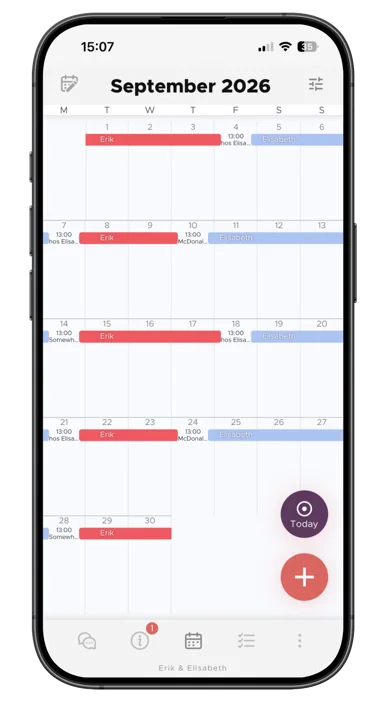
Routines help create a calm, predictable daily life — something both children and parents need in order to settle in and recover after a separation. When children know how their days and weeks will look, anxiety shrinks and a sense of safety grows. That doesn't mean the rules have to be identical in both homes. It means your child knows what to expect and can prepare for changes. The goal is a family life that fits your child's personality and age.
Food, Sleep and Unwinding
It helps to agree on the basics around food, sleep, and winding down: a bedtime that works in both homes, and evening and mealtime routines that look roughly the same. Life also gets easier if you agree on when it's time to give up the pacifier, the diaper, baby food, and the stroller — both the timing and how you'll respond when your child protests.
Activities
Make decisions about your child's activities together. If one of you forgets the reminders and doesn't make sure your child takes part, it's your child who loses out. Sometimes the best solution is for the parent who champions the music to take the child to piano lessons — even during the weeks the child lives with the other parent.
Eating Habits
Even older children benefit from a similar basic structure with both parents, adaptable as many of them are. Different attitudes to food can actually be a plus: the parent who cooks proper, nutritious meals balances the one who reaches for quick macaroni and ready-made meatballs, and vegetarian food in one home can be a great complement to the meat and fish dishes in the other.
Screen Time
Parents often see gaming, screen time, and movies differently. Sometimes you can agree; sometimes you have to let go and respect that each parent sets the rules in their own home. If so, be open with your child that you see screens differently and therefore have different rules. For the child, it can even be a win-win — different needs get met in different homes.
Presents and Holiday Gifts
Celebrations like Christmas, graduation, Eid al-Fitr, Hanukkah, and birthdays need coordinating with your co-parent — if only so you don't buy identical gifts, with the embarrassment and disappointment that follows. Stay humble about presents if your financial situations differ. For a child to truly enjoy a nice gift, they need to feel it was given with love and care. Gift-giving must never become a competition where two rivals try to outdo each other — in that game, the child is always the big loser.
School Breaks and Vacation Trips
Holidays and vacations call for changes to the schedule. For babies and younger preschoolers, it may be best to keep the usual routine even if it complicates travel: longer stretches away — two weeks, or even a full week — can be hard on small children who long for their other parent. Swapping a few days, for Christmas or Midsummer, usually works out fine. Teenagers, on the other hand, have wishes of their own to take into account when you adjust the schedule — time with friends, or a summer job. And for the summer break to feel cozy and restful, trips and stays need to be planned in advance.
Give the Child Some Time to Adjust
Remember that kids may need time to land back home between trips and visits to relatives, rather than being rushed from one experience to the next. In interviews, kids name it as one of the perks of separated parents: twice the travel and two birthday parties. But to enjoy those things, the planning has to follow the child's needs.
Performances, matches, graduations — occasions like these can be stressful when a child is expected to perform, and joyful and affirming when things go well. In those moments your child needs your support to focus on their task and on what's being celebrated. Squabbles between parents and frosty moods don't belong here! A parent who can't attend can still show support with an encouraging text, or celebrate with the child later that evening or the next day.
Summary
- Consistent routines in both homes give children room to live their lives, instead of spending energy on more adjusting than two homes already demand.
- Routines also mean fewer differences for you parents to negotiate week to week. Both of you know what's expected, and nobody has to double-check the details.
- If you see screen time differently, reconcile your views as far as you can. Sometimes your child will simply have to adapt to your differences.
- Give your child time to adjust, and remember that their personality and preferences shape what they need.