





Separation
Checklist: Separating With Children
Separating with children? A checklist of what to sort out first: where everyone lives, the schedule, handovers, money, sick days, and what to tell the kids.
A separation often triggers a life crisis, whether you wanted the split or not — you may feel confused, vulnerable, angry, and scared. Here's what a crisis does to you, and how to take care of yourself through it.

In a crisis, our usual coping strategies suddenly fall short. We can't rely on life to just keep rolling along — we have to consciously steer our thinking and behavior. Basic functions like eating, sleeping, and remembering can all be affected, and the worse we sleep and eat, the harder it becomes to get our thoughts and our lives in order. That's why routines help. Remember that grief and crisis are processes that change shape over time. There is no universal truth about how to handle a crisis or how long it will take — we are just as different in these situations as in everything else in life.
For your children's sake, I usually suggest six months as the time frame for getting your day-to-day life and routines back in order. That doesn't mean you can let everything go for six months, or that the wounds will be healed by then. It means you have a sense of the pace at which you need to move forward, build a functioning everyday life, and find a way to cooperate with your co-parent. The six months are a guideline to hold on to in the darkest moments — and establishing routines and steady parenting is itself part of the healing.
Have patience and compassion with yourself. You are reacting because you are human. Whatever you feel today, it will be different a year from now. Losing yourself for a while does not mean you have lost yourself forever. There is another life ahead.
Some people have strong defenses against accepting difficult truths. Perhaps you avoid thinking about the separation altogether, or deny and downplay your feelings. That doesn't mean you will deny what you're going through forever. Your defenses are a way of protecting yourself and letting the truth in gradually.
Find ways to distract yourself. Look for activities and situations that absorb you completely, and cherish the moments when you get to laugh and relax. Breaks like these both strengthen you and help you keep going.
Take on manageable tasks to rebuild your self-confidence and sense of control. The situation as a whole may feel overwhelming, but it is made up of many small parts, and each one can usually be solved on its own. Tackling one small thing at a time gives you the feeling that you can make a difference.
Are your thoughts helping you make sense of the situation, or are you stuck in loops that only feed your frustration and fear? Being aware of your thought patterns can keep you from getting caught in constant rumination. For some people, a kind of mental stop sign works; for others, picturing how they would like life to look in a year helps calm the mind.
Feeling angry and disappointed with your co-parent is an inevitable part of most separations. Accept those feelings, and limit contact between the two of you if it makes you feel worse — later on, your contact can become less regulated. Hold it together when the kids are around, and try to say something positive about the other parent now and then. It's a way of respecting your child's love for both of you.
Talking about what you're going through helps you sort out your thoughts and feelings and move forward. It is healing to build a coherent, understandable picture of what happened. But be careful about dwelling on your co-parent's bad sides, even when it feels good to have your experience confirmed. The risk is that those conversations harden your image of them — or reach the child.
Strong emotions can't be hidden from children. Let them know you're sad and angry, and that this is how people react to big changes. Explain that things will feel different later on.
If you've lost your appetite — or constantly feel hungry — stick to simple, basic meals. Go for ready-made meals or fresh pasta when you're out of ideas; you can live on a repetitive diet for months. Eating lunch with colleagues can also help: the social side of a meal makes it easier to get something down at all, or to stop at one portion.
Try not to shop when you're hungry, and keep chips and unhealthy snacks out of the house if you're prone to snacking. If you lack appetite, do the opposite: stock up on things that are easy to nibble, like eggs, cold cuts if you're not vegetarian, and ready-made meals. Make it easy to get something to eat when eating is hard.
Getting enough sleep is often one of the hardest things in a crisis. Your need for sleep may be unusually high because of stress and anxiety, or because sleep becomes an escape. Even more common is trouble falling asleep, or waking during the night and not being able to drift off again. Protect your sleep by going to bed at the same time each night. Avoid screens, work, and strenuous exercise in the last hour before bed. Choose things that help you wind down instead — music, podcasts, a bath, a light novel. Write down your worries and the tasks you need to handle, so they're easier to let go of. If you wake during the night, get up instead of tossing and turning: make a cup of tea and repeat your wind-down routine. Setting an alarm even on weekends keeps you from sleeping in too late. And it may feel safer to fall back asleep if your child is sleeping in the same bed as you.
Many people turn to drinking when life gets tough. Whether it's long talks with friends or comfort and distraction when you're alone, pay attention to how alcohol affects you. If you find yourself losing your inhibitions and messaging or calling your co-parent, a break from alcohol might do your co-parenting some good. Watch your consumption if you notice it creeping up — a drinking log on your phone can help you break habits you don't want to establish. Make plans that don't involve drinking, and keep an alcohol-free routine on the first day of your child-free week and on occasions that call for extra care. Alcohol can also disturb your sleep.
Many newly separated people also reach for cigarettes or snus to cope, and it's understandable if it brings some relief during a crisis. But if you don't want to end up with an addiction, stay aware and cut back gradually once you find your footing again.
The truth is that physical activity can be more effective than medication. So keep moving! Create a routine you can actually stick to, and stay consistent. It doesn't matter how you move — only that you do. A little, regularly, beats grand efforts that fizzle out. The habit is easier to keep if you make it fun or social, so turn it into something you do with friends.
Anxiety and worry can make you restless and unfocused; a lunchtime workout can even help you perform better at work. Your children benefit from moving too, so find something active to do together. And allow yourself things that simply feel good and lift your mood — a massage, eyelash extensions, a ski trip with friends. All of it counts when you're feeling low.
It can feel hard to talk about the divorce — you might feel sad or even embarrassed, or as if you no longer have any friends now that you're not a couple. Stepping back from social situations is fine if it helps. But if it turns into isolation and you're left too alone with your thoughts, you need social distraction. Not everyone around you will be good at listening or supporting you through a crisis, but doing something that takes your mind off it still helps.
It can also be a relief to tell people what has happened, so you don't carry everything alone. Many people find that others suddenly open up when you're open about your situation, and that relationships deepen. Comfort and help can come from the most unexpected places.
You also need concrete, practical support. A separation forces you to handle things you're not good at: suddenly you're the one cooking, or getting the car inspected. Financial and legal questions pile up in the wake of a separation too — get informed online, through your bank, or from a lawyer. Ask friends and relatives for help, both with the children and with practical things. When someone loses a partner to death, the neighbors show up with dinners in foil trays. When you separate, that support rarely comes, even though your life changes in a similar way. So you need to ask for help in order to get it.
Malin Bergström Child psychologist, associate professor and author
27 August 2026
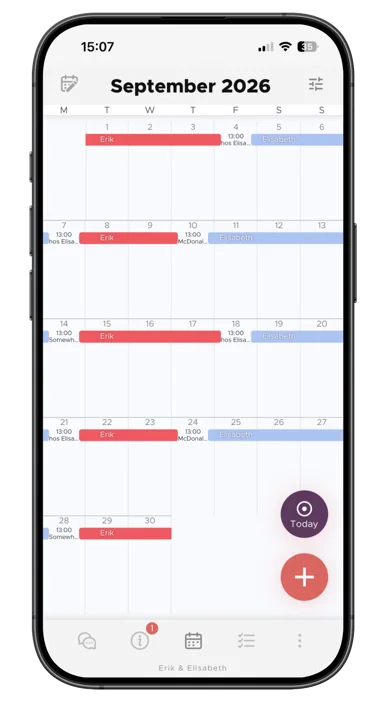
"The turning point came when we found the Co-parenting app. There's less fuss and both of us have a better handle on things. It feels so great!”
"Thank you so much for this app, it has finally gotten us to communicate!”

Separation
Separating with children? A checklist of what to sort out first: where everyone lives, the schedule, handovers, money, sick days, and what to tell the kids.

Separation
What to say when your child asks if you still love each other, or who wanted the divorce. Example answers to six tough questions, from a child psychologist.

Separation
Telling your children about a separation is hard. Child psychologist Malin Bergström on when to tell them, what to say and how to handle the days after.