





Separation
Checklist: Separating With Children
Separating with children? A checklist of what to sort out first: where everyone lives, the schedule, handovers, money, sick days, and what to tell the kids.
Children, like parents, are all different and experience a separation in their own way. For some it passes like a gust of wind; for others it's a life crisis that takes time and plenty of support to get through — and you probably already have a sense of how it will be for your child.

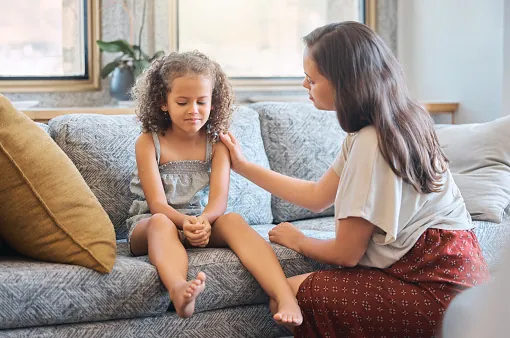
It's normal and healthy for a child to react to change, but it still hurts to watch. When your child mopes around with a furrowed brow, melts down over nothing, or looks at you with sad eyes, it's clear the divorce has put them through something hard. And in the middle of a separation, we parents are less able to respond — we're in upheaval ourselves, with a long list of practical things to sort out. Try to remember that your child is reacting to the change, and that the reactions will fade once life settles again. A separation should, after all, lead to everyone in the family feeling better. So when your child reacts, they need our help — and our reassurance that things will get better.
We child psychologists sometimes say that children react "in stripes": the reactions come in waves, with completely ordinary life in between. Maybe it has to do with children's enviable ability to live in the moment. Maybe they don't even find the separation itself particularly hard. Instead, they react when they realize that you won't both be at the school graduation, or that the yearly family trips to the favorite spot won't happen anymore.
Children's reactions often surface alongside the practical consequences of the divorce, and it's common for them to shift over time. Some children go through periods of grieving that their parents are divorced and fantasize about them getting back together. As your child reaches each new stage of development, they'll need to make sense of the separation all over again — so be patient, and be ready to explain once more why you separated and why you won't become a "real" family again.
Many parents with shared custody say their child reacted less than they had feared. That can come down to the child's personality, but also to the parents having arranged things in a way that spared the child. Even so, keep checking in regularly on how your child seems to be doing — just as you did when you all lived together.
You may still worry that your child is quietly holding something back. The risk of a child bottling up their feelings shrinks when you keep an ongoing conversation about the divorce and an open atmosphere where you talk about — and show — what you feel. You can also try putting words to what you see and letting your child respond: "You seem pretty happy and like your usual self, even though we've divorced..." I don't recommend pushing or prodding children to "open up". Some children don't react at all, and some react much later. Talking simply doesn't suit everyone, and pressing a child who doesn't want or need to talk can leave them wondering whether they're feeling the "wrong" way.
Tip! Children express and release feelings in different ways. Some do best talking to an adult. Others process by playing, being physically active so the feelings can work their way out through the body, or confiding in friends. No one way is better than another — what matters is finding the way that suits your child.
As parents we often feel guilty about the separation and read every reaction as being connected to it. That instinct has an upside — it keeps us open to our children's feelings — but it can also make us over-interpret or misread them. Children develop on many fronts at once, and they go through phases no matter how their family lives.
Malin Bergström Child psychologist, associate professor and author
27 August 2026
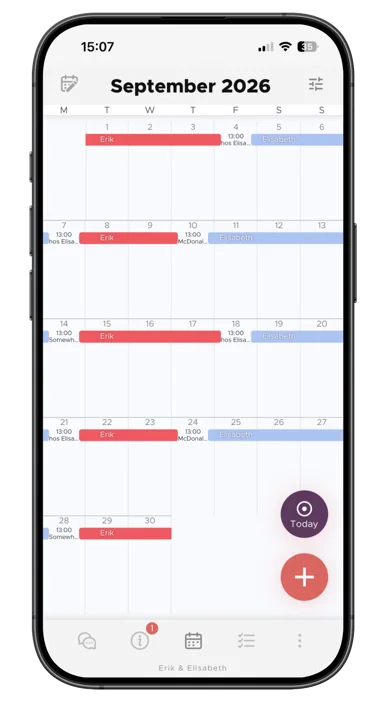
"The turning point came when we found the Co-parenting app. There's less fuss and both of us have a better handle on things. It feels so great!”
"Thank you so much for this app, it has finally gotten us to communicate!”

Separation
Separating with children? A checklist of what to sort out first: where everyone lives, the schedule, handovers, money, sick days, and what to tell the kids.
Separation
What to say when your child asks if you still love each other, or who wanted the divorce. Example answers to six tough questions, from a child psychologist.

Separation
Telling your children about a separation is hard. Child psychologist Malin Bergström on when to tell them, what to say and how to handle the days after.