





England
Youth
Can I Choose Which Parent to Live with in England?
You are allowed to say how living in two homes feels. If you live in England, adults should listen to your views—but you do not have to solve your parents’ disagreement.
More than half of all parents separate, yet a divorce is often a crisis even for the parents who chose it. Here you can read about how parents might feel — so it gets easier to understand why they act the way they do.

When parents are in crisis, children feel it too. You’re forced into a lot of changes you didn’t choose. On top of that, your parents might not function very well during the divorce. They might forget the laundry, cook less tasty meals, and miss things they usually keep track of. That’s partly because they have so much else to deal with: they need to agree on money, who will live where, and how the schedule for you will work. They also have a lot of crisis feelings. They might panic about what they’ve set in motion, worry about managing on their own, or feel abandoned. But most of all, separated parents usually feel guilty about the divorce, because they know it’s hard on their children.
How parents react partly depends on whether they wanted the divorce or not. Many parents decide to divorce together; sometimes one wants to leave while the other wants to stay. It’s a bit more common for mothers to start a divorce than fathers. But whether one parent or both made the decision, it comes from how their romantic relationship has been. At the beginning, the divorce is usually hardest for the parent who didn’t want it — but as the weeks go by, feelings tend to change. That’s typical for anyone in a crisis: feelings and thoughts can shift quickly.
It’s common for parents to be extra emotional during a divorce. They might swing between very happy, angry, and sad — all in the same day. That’s how people work in a crisis: they lose control more easily.
It can be really tough to see your parents like this. It might feel like you can’t rely on them the way you usually do. But losing some control over their emotions can actually help separated parents — it makes it easier for them to get used to all the changes a divorce brings. What matters is that the crisis feelings fade after the divorce. Children need a new, stable everyday life where parents are more like their usual selves again.
Here are some feelings separated parents might have. They can come all at once and change quickly.
It’s common for separated parents to feel ashamed and guilty about the divorce. Shame feels like you’ve done something wrong. You might regret it, yet still feel it was necessary. It can also make you feel powerless, like you can’t steer your own life.
Shame and guilt are tricky feelings. They make you go quiet and want to withdraw. You blame yourself and find it hard to feel happy and calm. Shame also colors other feelings — it can stop you from feeling happy, because you think you don’t deserve it.
Guilt affects thinking, too. Parents who feel guilty get worse at making decisions because they don’t trust their own judgment. They can become self-absorbed and find it hard to notice how others — like you — are feeling, because the guilt takes up so much room.
For most parents, the guilt calms down once they’ve separated. As a child, it can be hard to understand why parents divorce when it makes them feel so guilty and ashamed. But most parents divorce because they feel they have no choice. At first they might panic about how things will be for the children — but they usually believe things will get better later on: that they’ll become happier, calmer, and better parents. And often they do! It just takes a while.
Another common crisis feeling is anger. Arguments are a common reason for divorce, and during the divorce itself, parents are often angry with each other. The anger usually comes from their disagreements as parents — but it can also come from guilt. When you feel ashamed, it’s tempting to blame someone else for everything that’s wrong. That way you don’t have to look at your own part.
Anger usually calms down after the divorce, too — but some parents refuse to let it go. That can be tough for children. Anger stops parents from being calm and happy, and it can be scary when a parent gets angry easily. It’s good to know that parents can get help with their anger: psychologists and other therapists can work with parents one at a time or together.
Many parents feel sad during a divorce. They think about everything they’re losing and what they’re putting the children through. For many, it’s sad that the family won’t stay together — maybe they dreamed the family would last forever. A parent who didn’t want the divorce can grieve being left, and it’s common to wonder what they did wrong. Even the parent who wanted the divorce can feel sad, because they felt they had no choice.
It can be scary to see your parents sad. You might feel you have to be extra kind and calm to help them feel better, and try to hide it when you’re sad or worried yourself, to protect your parent.
But sadness isn’t necessarily a bad feeling during a divorce. You can actually look at it the other way around: if no one were sad about the divorce, it would be as if the family hadn’t meant much.
Being together often helps when you’re sad. It can be comforting just to hear someone say they see that you’re sad. You can also do things together that cheer you up. That way the sadness can lift for a while and become easier to carry.
It’s common for parents to become restless and full of extra energy during a divorce. Instead of listening to what you say, they might rush around fixing things, their minds always somewhere else. They become less patient and might talk unusually loudly and quickly. This is a crisis reaction: something is ending, and the new hasn’t quite begun. The brain goes into survival mode, and the stress makes them think more about the future than the present.
Since a divorce is tough for you too, you need at least one calm moment each day when your parent really listens to you. It might be when they pick you up from an activity, after dinner, or at bedtime. Telling your parent that you’d like these moments can help them realize how restless they’ve become. Parents also often swing between restlessness and tiredness. Later, after the divorce, the swings usually settle and their energy goes back to normal — a sign that the crisis is over.
Some parents don’t get angry or sad — they turn gray and silent instead. Under stress, that can be a survival function: they shut down to cope. Slowly, the shutdown usually eases. Suddenly you get a hug, or hear your parent laugh again. Sometimes it’s only then that you realize how cold and quiet they had been.
Being cold and shut down can also be a sign of deep anger and hurt. The parent might feel the divorce is unfair, or be angry at the other parent. Staying silent can be a kind of protection that lets the feelings calm down and eventually pass. What matters is that the parent doesn’t stay silent forever. After about six months, it’s good if they can start talking about what they feel instead. Psychologists and other therapists can help parents who feel this way. For some parents, spending time with friends (or with their children), exercising, or doing something they enjoy helps — they start feeling better when they see and do other things.
For some parents (and children), a divorce is actually a relief! If there was a lot of fighting or tension in the family, getting divorced can feel freeing. The parent might feel they can be themselves again. And for you, it can be lovely to see your parent happy — spending time together and doing fun things.
But you might also feel guilty if your other parent isn’t as happy, or feel bad about doing well yourself. Remember: you have the right to feel good. Separated parents almost always want their children to be happy and thriving!
Having fun matters most exactly when times are tough — it helps you cope. Being happy sometimes doesn’t mean you can’t also feel sad and angry, or that you’ve stopped caring about what happened. All the feelings can exist at the same time. But happiness helps calm the others.
Malin Bergström Child psychologist, associate professor and author
27 August 2026
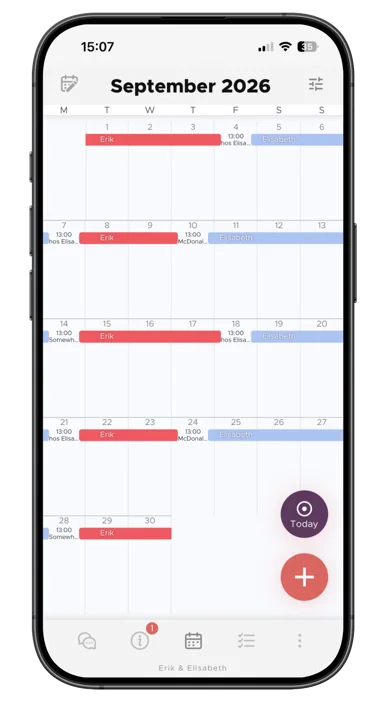
"The turning point came when we found the Co-parenting app. There's less fuss and both of us have a better handle on things. It feels so great!”
"Thank you so much for this app, it has finally gotten us to communicate!”

England
Youth
You are allowed to say how living in two homes feels. If you live in England, adults should listen to your views—but you do not have to solve your parents’ disagreement.

England
Youth
You deserve care, safety and someone who listens. If something at home feels frightening or hurts you, you can ask for help—even when the person involved is a parent.

England
Youth
You might feel sad, angry, relieved or unsure what you feel. If you live in England, there are people who can listen. You do not have to wait until things feel unbearable.
United States
Youth
You can tell adults what living in two homes feels like. In the United States, how a court hears children depends on the state. You are not responsible for deciding your parents’ dispute.
United States
Youth
You deserve care and protection from harm. If someone at home hurts you, threatens you or leaves you without the care you need, you can tell a safe adult.
United States
Youth
You may be worried, angry, relieved or not sure what you feel. If your parents are separating, you can ask someone to listen. You do not have to handle it alone.
Canada
Youth
You can say what life in two homes feels like. If you live in Canada, adults should listen to your views. You do not have to settle the disagreement between your parents.
Canada
Youth
You deserve care and protection from harm. If something at home hurts or frightens you, you can ask for help. You do not need to know the law before talking to a safe adult.
Canada
Youth
Changing homes or hearing your parents argue can feel like a lot to carry. If you live in Canada, you can ask someone to listen—even when there is no emergency or court case.