




England
Youth
Can I Choose Which Parent to Live with in England?
You are allowed to say how living in two homes feels. If you live in England, adults should listen to your views—but you do not have to solve your parents’ disagreement.
When parents get divorced, life can feel a bit upside down for a while. It can help to know the stages most families go through — and that things usually get easier and better in the end.

The first stage is often the tense, sour mood between parents before they decide to divorce. When their love ends, it usually shows: they're not as happy and relaxed as they used to be. But as a kid, you might not notice anything at all.
You hear them arguing at night and slamming doors. Some children find it hard to sleep and worry that their parents might divorce. Fighting between parents is almost always tough for kids — even babies get stressed when parents argue!
Parents who argue a lot, or who are often angry with each other, might decide to divorce to stop the fighting. Living apart can help them avoid arguments. They often want to protect you from the fights, but they can't stop arguing as long as they live under the same roof.
When parents decide to divorce and the fighting stops, the divorce can actually be good for the children — even if it doesn't feel that way in the middle of it. After some time, life usually becomes calmer and better for both kids and parents.
With some parents, you might not notice anything before they announce the divorce. Everything seems normal — and then the news comes as a shock. It can be scary to realize something was going on without you noticing, and you might wonder if there are other bad things you don't know about. But it can also be a sign that you've been living your life exactly as you should! Kids are supposed to be busy with their own lives — school, friends, and hobbies.
If you haven't noticed your parents having problems, the divorce usually isn't happening because they're especially angry with each other. It's more that they no longer enjoy being together and aren't happy. They believe life and the family will work better in two homes.
A separation can mean finding new homes and working out how daily life will fit together. You may wonder when you will be with each parent and how often you will change homes. In Sweden, children have a right to information and an opportunity to say what they think about those arrangements. The adults must consider your views according to your age and maturity. You do not have to solve their disagreement.
The adults are responsible for arrangements that meet your needs and keep you safe. In Sweden, a court can decide disputed questions about where a child lives or contact with a parent. Arrangements may change as your needs change, but an existing legal decision does not disappear just because someone wants to try a different schedule. You can keep telling a trusted adult how things feel.
This is usually the hardest period. Parents often get caught up in the practical stuff and feel guilty about the situation. That’s a shame, because this is when children most need support — and to know how everything is going to work. It can be tough to change schools or move away from friends. You might also have to share a room in the new home, or live in a house or apartment you like less.
Many kids dislike moving and living every other week at first. It can be hard to keep track of your things, and you might miss the parent you’re not with. Life can feel more complicated and worse than before. You might also worry about how your parents are doing.
In this stage, it means a lot when parents do their best to make things good. Moving between homes is easier if they help you with laundry, packing, and carrying your things. Routines help too: some families cook the same favorite meal on the first evening you arrive, and do something special at the end of the week before you move again. It’s also important that your parents help you get to school, friends, and activities — especially if you have a longer trip or need to find your way from a new place.
If there has been a lot of fighting and chaos at home, this period can feel tough — but also calmer, if the arguing stops. Researchers have found that long-lasting conflict between parents is the hardest thing for children, whether the parents live together or not.
After a few months in the new homes, life usually starts to feel like a new normal. Now it’s extra important for daily life to be calm and steady. After all the changes, you need time to rest and to know what to expect. Sometimes sadness or anger shows up just as things calm down — maybe because you finally have room to process your feelings. And if you were very angry or sad during the divorce, those feelings often fade and disappear now.
Some families need to adjust the living arrangement to find a rhythm that works for everyone. For most people, the most important thing is that life becomes calm and feels normal again. Then you can get back to the things you cared about before the divorce. With luck, you also come out of it knowing something valuable: you can get through tough times and be okay.
We hope this guide to how divorce works has helped! ❤️
Malin Bergström Child psychologist, associate professor and author
17 September 2026
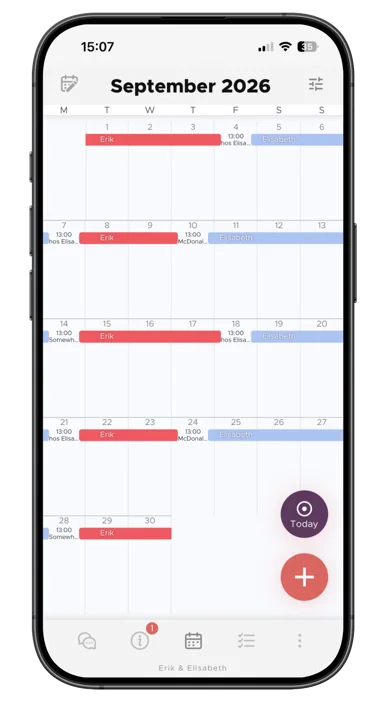
"The turning point came when we found the Co-parenting app. There's less fuss and both of us have a better handle on things. It feels so great!”
"Thank you so much for this app, it has finally gotten us to communicate!”

England
Youth
You are allowed to say how living in two homes feels. If you live in England, adults should listen to your views—but you do not have to solve your parents’ disagreement.

England
Youth
You deserve care, safety and someone who listens. If something at home feels frightening or hurts you, you can ask for help—even when the person involved is a parent.

England
Youth
You might feel sad, angry, relieved or unsure what you feel. If you live in England, there are people who can listen. You do not have to wait until things feel unbearable.
United States
Youth
You can tell adults what living in two homes feels like. In the United States, how a court hears children depends on the state. You are not responsible for deciding your parents’ dispute.
United States
Youth
You deserve care and protection from harm. If someone at home hurts you, threatens you or leaves you without the care you need, you can tell a safe adult.
United States
Youth
You may be worried, angry, relieved or not sure what you feel. If your parents are separating, you can ask someone to listen. You do not have to handle it alone.
Canada
Youth
You can say what life in two homes feels like. If you live in Canada, adults should listen to your views. You do not have to settle the disagreement between your parents.
Canada
Youth
You deserve care and protection from harm. If something at home hurts or frightens you, you can ask for help. You do not need to know the law before talking to a safe adult.
Canada
Youth
Changing homes or hearing your parents argue can feel like a lot to carry. If you live in Canada, you can ask someone to listen—even when there is no emergency or court case.